Fiber cement siding
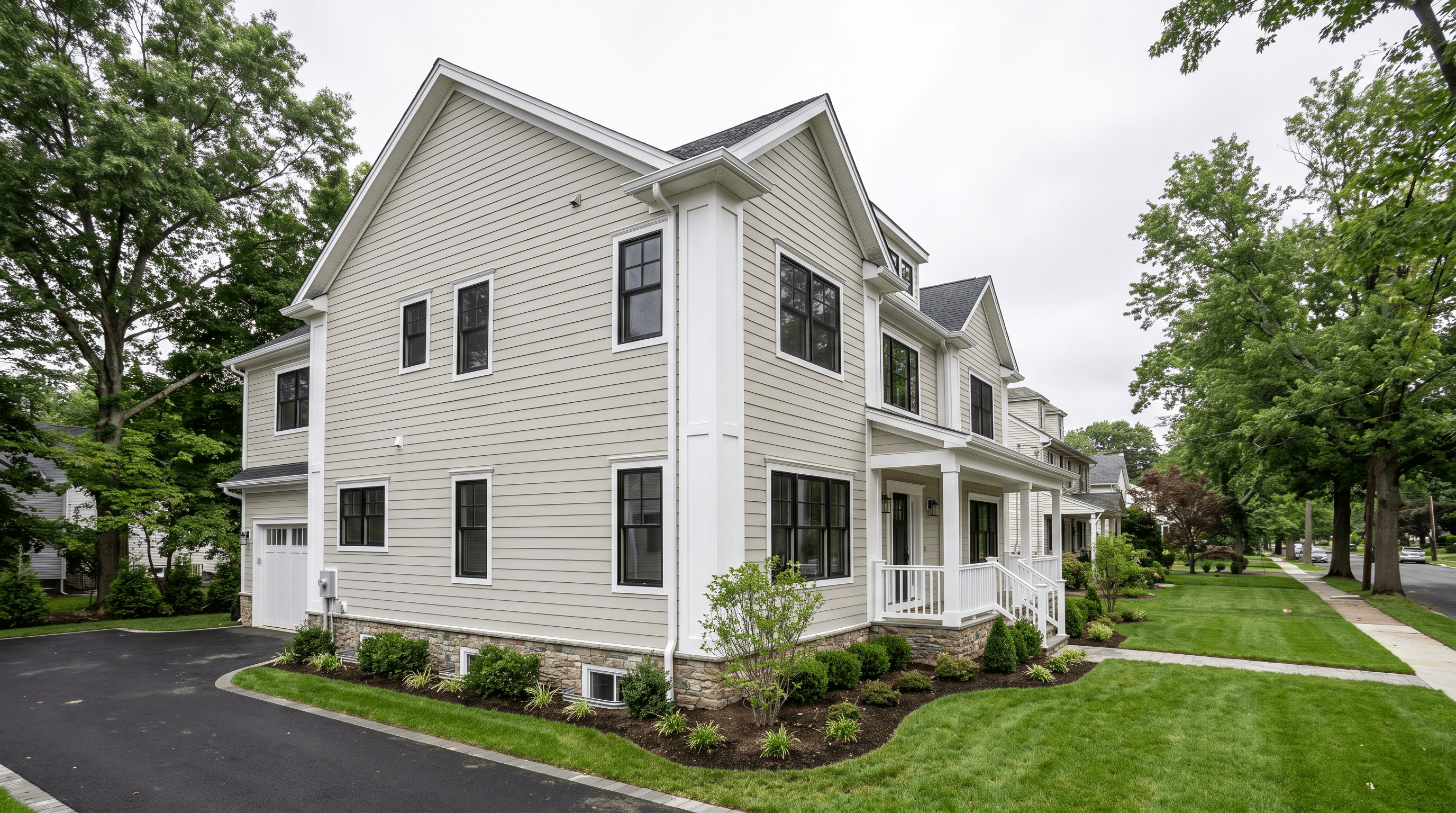
The material we specify most often in this climate. Holds paint, ignores insects, and handles New Jersey freeze-thaw cycling better than anything else at its price.
Read moreSiding
It is the first of several, and every one of them leaks somewhere eventually. What matters is whether the wall behind can drain and dry.
The wall is open once in thirty years. We do not cover it up.
Barrier and drainage gap before a single board goes on.
Sill pans and head flashing lapped into the barrier.
In short
A full re-side in New Jersey typically runs $18,000 to $120,000 depending on house size, material and how much repair is needed once the old cladding is off — vinyl at the lower end, fiber cement in the middle, cedar at the top. We do not side over existing cladding. Doing so means nobody inspects the sheathing, any rot stays where it is, and the new work sits on a surface never meant to be a substrate.
Overview
We strip to sheathing. That is the part of the specification that separates a re-side from a cover-up, and it is non-negotiable for us, because the wall is only open once in thirty years. With the old cladding off we can see what it was hiding — rot at window heads and sills, sheathing that has gone soft behind a failed flashing, a previous repair nobody ever detailed — and repair it while repair is cheap.
Then the assembly goes back in the right order: a water-resistive barrier lapped in shingle order so water runs down and out rather than in, a drainage gap on the assemblies that need one so the back of the board can dry, flashing integrated at every opening and penetration, and only then the cladding itself. Corners, trim and the junctions against the roof are detailed with metal and correct laps rather than with sealant.
On material: fiber cement handles New Jersey freeze-thaw cycling and summer humidity better than anything else at its price, holds paint and does not feed insects, and it is what we specify most often. Vinyl has improved a great deal and is the right answer on some budgets. Cedar is the best-looking and asks for maintenance you should be honest with yourself about. Stucco in this climate needs a drainage plane behind it — virtually every stucco failure we remediate was installed without one.
What we do
Material is the decision homeowners arrive with. These are the ones that decide whether it lasts.
The material we specify most often in this climate. Holds paint, ignores insects, and handles New Jersey freeze-thaw cycling better than anything else at its price.
Read moreThe budget answer, and better than its reputation when it is hung correctly — which means loosely, on a flat wall, with the laps and J-channel actually doing their job.
Read moreThe best-looking cladding there is, and the one that asks most of you. We will tell you honestly what the maintenance cycle looks like before you choose it.
Read moreVirtually every stucco failure we are called to was installed without a drainage plane behind it. Remediation means a full strip and rebuild, not a patch — patching does not address the cause.
Read moreThe edge of the roof is where water, ice and wind all arrive at once. Rotten fascia is usually a gutter problem, and replacing the board without fixing that just restarts the clock.
Read more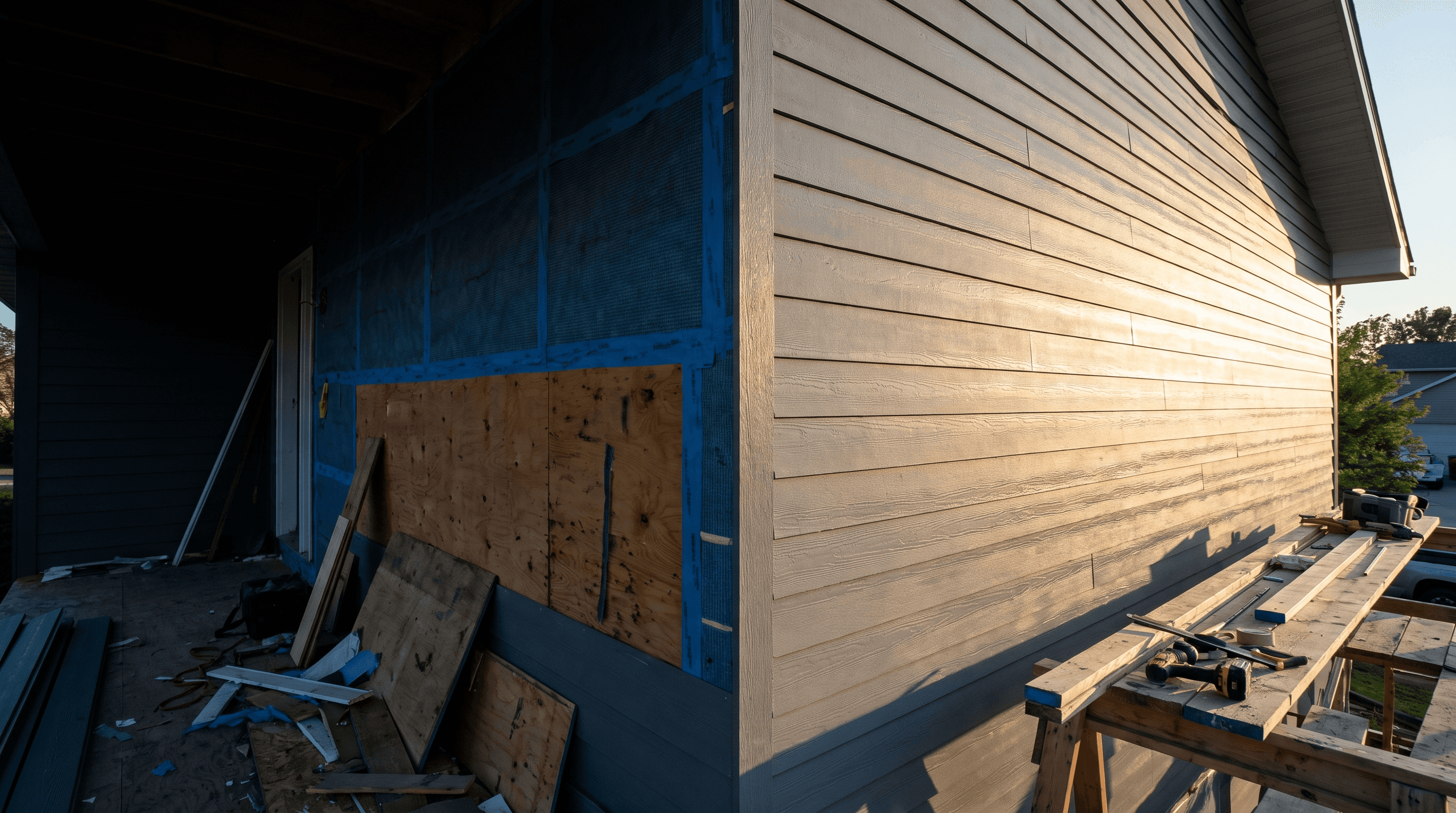
The assembly
Every cladding leaks somewhere. The question is where the water goes next.
Fixed straight onto sheathing, it goes into your framing. Over a barrier and a drainage gap, it runs down, out at the bottom, and dries. That difference costs very little and decides everything.
Recent work
Siding is not broken out as its own portfolio category yet. The Westfield addition carries a full cladding tie-in between new and original, and the Princeton whole-home renovation included complete envelope work — both are a fair read on the standard.
How a re-side runs
The same four stages, on the trade where what you find in week one changes week three.
We look at the elevations that fail first — southern, western, anything under a roof junction — and probe where we suspect the sheathing has gone. You get an honest range rather than a fixed price pretending the wall holds no surprises.
Material, profile, exposure, colour and trim details chosen, the permit filed, and the work sequenced elevation by elevation so the house is never fully open. Lead times on fiber cement colour lines are real and we order against them.
Old cladding off one elevation at a time, sheathing and framing repaired where we find rot, barrier installed and lapped, then every opening and junction flashed before a single new board goes up.
New cladding, corners, trim and caulk joints where caulk genuinely belongs, then a full site clean-down, a walkaround with you, and the township inspection closed out.
Where we work
Exposure ages cladding unevenly. A southern or coastal-facing elevation can need attention a decade before the sheltered side of the same house does.
Towns we work in most often
All 21 counties
Questions
A full re-side typically runs $18,000 to $120,000 depending on the size of the house, the material and how much repair is needed once the old cladding comes off. Vinyl sits at the lower end, fiber cement in the middle, cedar at the top. Stucco remediation is priced separately because the scope is not known until the wall is open.
Fiber cement, for most houses. It handles our freeze-thaw cycling and summer humidity better than anything else at its price point, holds paint well and does not feed insects. Vinyl is the budget answer and has improved considerably. Cedar is the best-looking option and needs real maintenance. Exposure matters too — a southern or coastal elevation ages years faster than a sheltered one.
It is physically possible and we do not do it. Siding over the old cladding means nobody inspects the sheathing, any rot stays where it is, and the new installation sits on a surface that was never designed to be a substrate. A re-side is the one chance in thirty years to see the wall, and covering it up wastes that.
Almost always because it was applied without a drainage plane behind it. Stucco is absorbent, our climate is wet, and without a way for water to drain and dry the sheathing and framing behind it stay damp and rot. Remediation means a full strip, repair of what is behind, and reinstallation over a properly detailed assembly — patching does not address the cause.
Generally yes. Re-siding requires a building permit in most New Jersey municipalities, and where sheathing is replaced or windows are reset the work is inspected. We file and close the permit as part of the job.
Related work
Start your project
Let's create a home that fits how you actually live — and holds up for the next twenty years.


