Replacement windows
Insert or full-frame, decided per opening rather than per house. Where there is any sign of past water, full-frame is the only way to see and re-flash the rough opening.
Read moreWindows
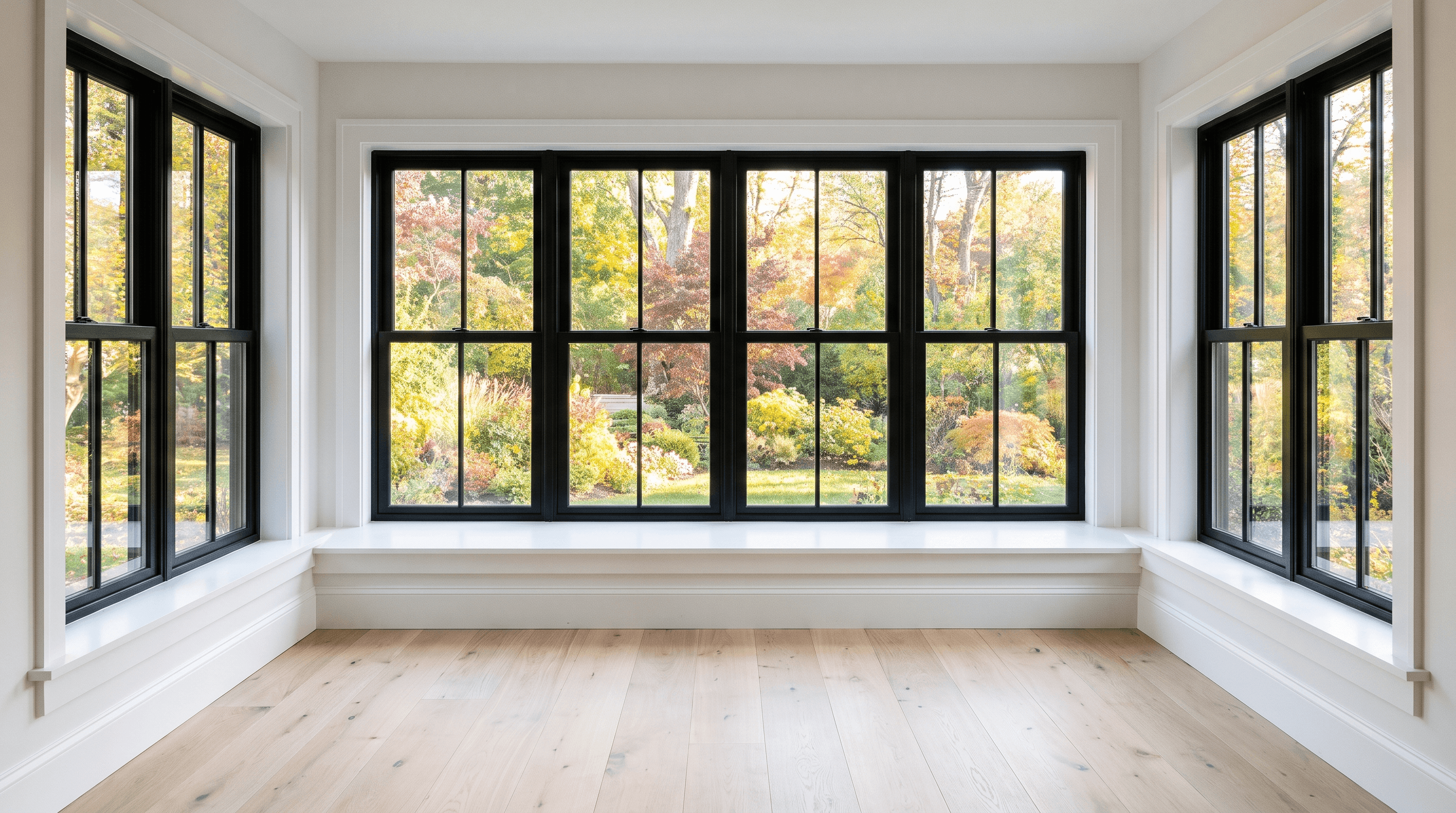
What decides its life is how that hole was flashed — the twenty minutes before the unit went in, not the sticker on the glass.
Sloped, with end dams, under every unit we set.
Jamb over pan, head over jamb, barrier over head.
The only way to see and re-flash a rough opening.
In short
Budget roughly $900 to $2,500 per opening installed for quality double-hung and casement units, so a whole-house replacement in New Jersey typically runs $9,000 to $75,000. An insert leaves the existing frame and fits inside it — cheaper, quicker, and it loses glass area. Full-frame removal goes back to the rough opening, which is the only way to inspect and re-flash it. Where there is any sign of past water, full-frame is the only honest option.
Overview
An opening interrupts every layer of a wall at once — cladding, drainage gap, water-resistive barrier, sheathing, framing — which is why it is the most vulnerable part of any elevation and why the installation matters more than the unit. Done properly, the replacement sits on a sloped sill pan with end dams, the jamb flashing laps over the pan, the head flashing laps over the jambs and tucks under the barrier above. Every lap is in shingle order and none of it depends on sealant.
Done the common way — unit in, foam around, caulk the perimeter, trim back on — the same water arrives at the opening and has nowhere to go except into the rough opening and the framing below it. That failure takes years to appear and shows up as a stained ceiling or a soft sill rather than as an obvious leak, which is why it so often gets blamed on the window instead of on the day it was fitted.
On units: we fit what suits the house and the budget rather than what carries one manufacturer’s badge. Double-hung and casement cover most of what we replace; bay and bow units need their own structural support and a roof of their own; entry and patio doors are the same flashing discipline at a larger scale with a threshold pan instead of a sill pan. Where a bedroom opening is involved, egress dimensions are checked against current code before anything is ordered.
What we do
The unit is the part you choose. These are the parts that decide what it does in year ten.
Insert or full-frame, decided per opening rather than per house. Where there is any sign of past water, full-frame is the only way to see and re-flash the rough opening.
Read moreOne of the lines we install most. Good units, properly supported product documentation, and flashing instructions we actually follow — which matters more than the badge on the frame.
Read moreA bay is a small structure, not a big window. It needs support beneath it, a roof above it and insulation in both — which is where most of them go wrong.
Read moreThe same flashing discipline as a window with a threshold pan instead of a sill pan — plus a swing, a lock, a sill and a sweep that all have to work together for years.
Read more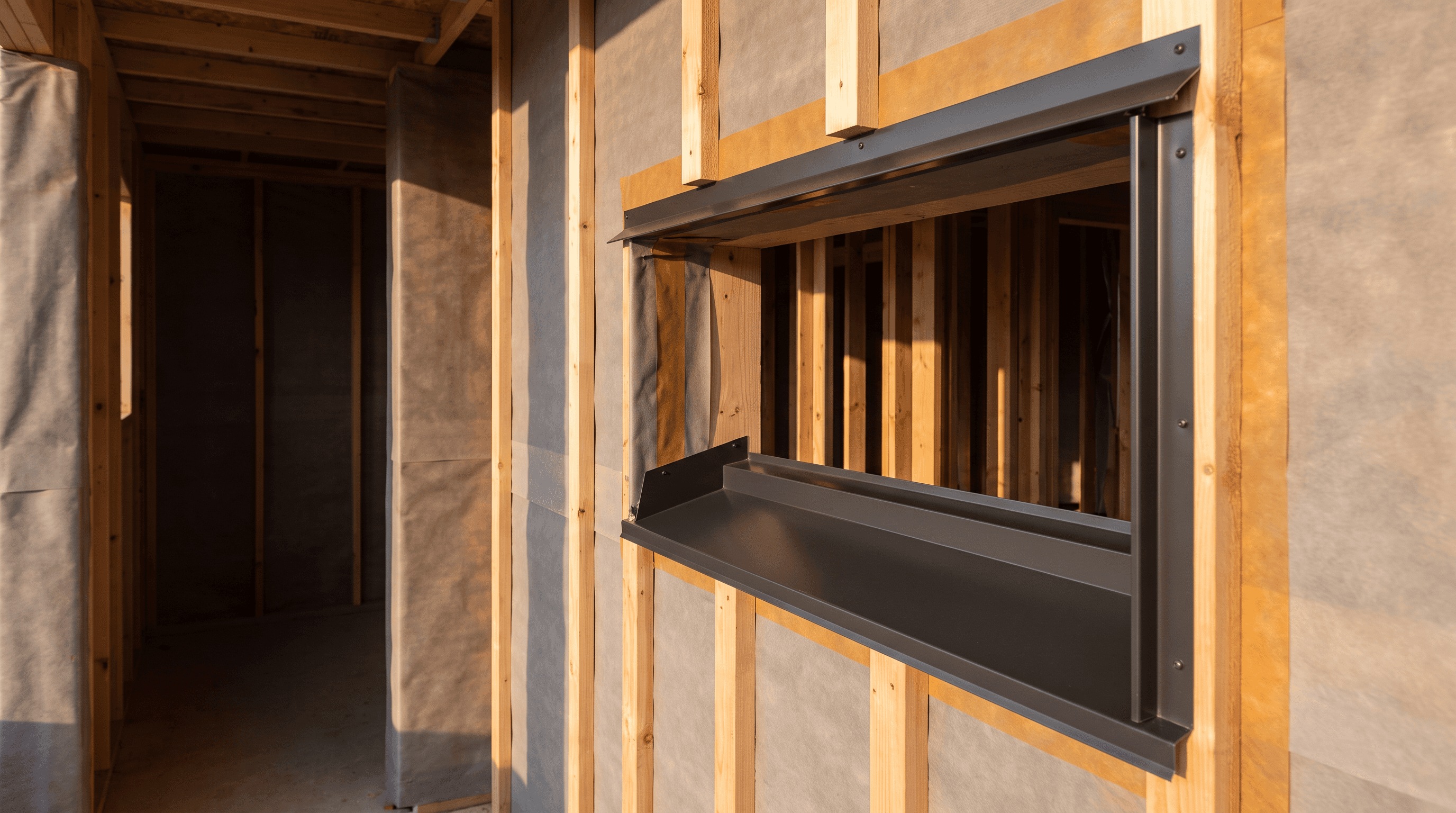
The opening
Openings interrupt every layer of a wall at once. That is why they leak.
Done properly, water that gets behind the cladding runs down the barrier, over the head flashing, across the pan and back out. Done the common way, it arrives at the rough opening and stops there.
Recent work
Window work is not broken out as its own portfolio category yet. The Princeton whole-home renovation included full window replacement across the house, and the Westfield addition set every new opening from scratch — both show the same flashing standard.
How a replacement runs
The same four stages, on the trade where lead time decides the schedule more than labour ever does.
Every opening measured individually — no two in an older house are the same — and the condition of each rough opening assessed. That is what decides insert against full-frame, and it is decided per window rather than per house.
Unit type, operation, glazing and exterior colour chosen, the permit filed, and the order placed. Custom sizes and specialty shapes run six to ten weeks, so the order goes in long before a crew is scheduled.
Old units out, rough openings inspected and repaired, sill pans installed, units set plumb and square, then jamb and head flashing lapped into the barrier in shingle order. Interior air sealing before the trim goes back.
Interior casing and stool made good, exterior trim and cladding reinstated, operation and locks checked on every unit, then the walkaround and the township inspection closed out.
Where we work
Housing age decides what is behind the casing. In older stock we are usually repairing a rough opening as well as setting a unit, and that is better known before the quote.
Towns we work in most often
All 21 counties
Questions
Budget roughly $900 to $2,500 per opening installed for most quality double-hung and casement units, so a whole-house replacement typically lands between $9,000 and $75,000 depending on count, size and whether the openings need full-frame removal. Bay and bow units and large sliding doors are priced individually.
An insert leaves the existing frame in place and fits a new unit inside it — quicker, cheaper, and it loses some glass area. Full-frame removal takes everything back to the rough opening, which is the only way to inspect and re-flash it properly. Where there is any sign of past water, or where the existing frame is rotten, full-frame is the only honest option.
Usually yes. Window replacement generally requires a building permit in New Jersey municipalities, and where an opening is being resized or a bedroom egress opening is involved there are dimensional requirements to meet. We file the permits and meet the inspector as part of the work.
Two to five days on site for most homes once the units arrive, with the whole job spanning one to three weeks around the permit and the delivery. Manufacturing lead time is the real variable — custom sizes and specialty units routinely run six to ten weeks, so the order goes in well before the crew is scheduled.
Rarely, if that is the only reason. Replacement windows pay back slowly on energy cost alone, and air sealing the rest of the envelope usually buys more comfort per dollar. They are worth it when the existing units are failing, when comfort and noise matter to you, or when the house is being re-sided anyway and the openings can be re-flashed at the same time.
Related work
Start your project
Let's create a home that fits how you actually live — and holds up for the next twenty years.


