Siding
Cedar andwood sidingbeautiful, and demanding.
Nothing else looks like real wood on a house. Nothing else asks for as much attention afterwards either, and you should know that going in.
In detail
Cedar & wood siding
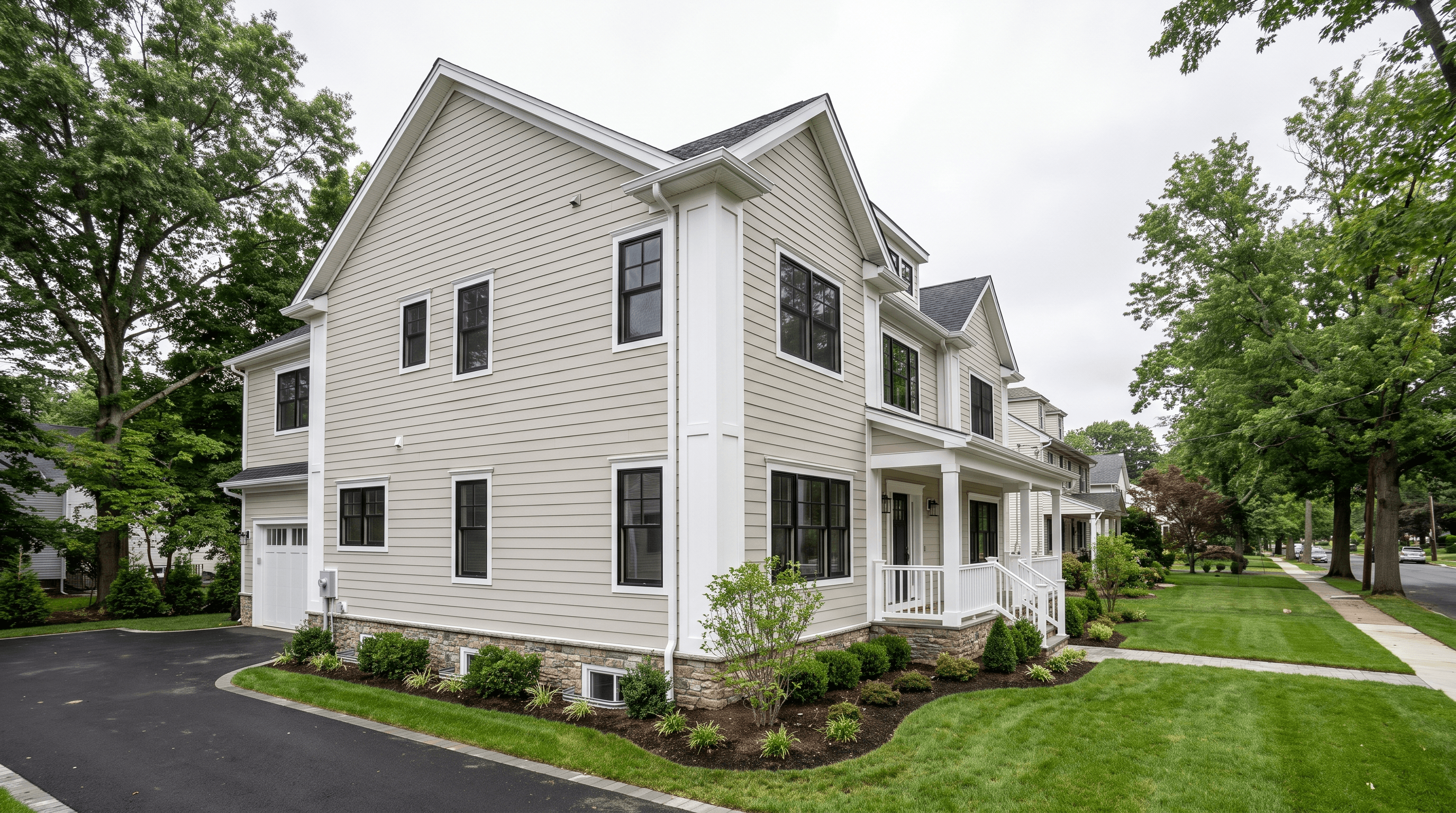
Cedar is naturally rot and insect resistant, takes stain beautifully and weathers to a silver-grey if you let it. The installation details that decide its life are mostly invisible: it goes up over a vented rain screen so the back of the board can dry, it is back-primed or back-stained on all six faces before installation rather than coated only on the face you can see, and it is fixed with stainless or hot-dipped fasteners because ordinary steel will bleed rust streaks down a cedar wall within a season.
The maintenance is real and we would rather be blunt about it. A clear or semi-transparent finish on cedar in New Jersey will want attention on a cycle of a few years, sooner on southern and western elevations, and longer if you choose a solid stain. Left entirely alone it will not rot quickly — but it will go grey unevenly, and the elevations that get the weather will go first. If that prospect bothers you, fiber cement with a factory finish will give you a similar line at a fraction of the upkeep, and we will say so.
What this covers
- Vented rain screen so the back of the board can dry
- Back-primed or back-stained on all six faces before installation
- Stainless or hot-dipped fixings that will not bleed into the face
- An honest maintenance cycle quoted before you commit to it
- Part of
- Siding
- Typical timeline
- 2–5 weeks
- Where
- All 21 New Jersey counties
Questions
Asked most aboutcedar & wood siding
How often does cedar siding need refinishing in New Jersey?
With a clear or semi-transparent finish, expect attention every few years — sooner on southern and western elevations, which take the weather. A solid stain lasts considerably longer. Left unfinished it will silver rather than rot quickly, but it silvers unevenly, which not everyone likes.
What is a rain screen and does cedar need one?
It is a vented gap between the barrier and the back of the cladding that lets air dry the board from behind. Cedar benefits from it more than any other material, because wood that cannot dry from both faces cups and splits. It is a small cost at installation and it is the single biggest factor in how long the cladding lasts.
The rest of the scope
Everything else insiding
Start your project
Ready to build or remodel your home?
Let's create a home that fits how you actually live — and holds up for the next twenty years.