Asphalt shingle roofing
Architectural shingles over a full tear-off, with ice-and-water membrane at the eaves and valleys and metal at every junction. Twenty to thirty years in this climate when it is ventilated properly.
Read moreRoofing
Almost never in the middle of a slope — at the valley, the chimney, the roof-to-wall step. That is where a twelve-year roof and a thirty-year roof part company.
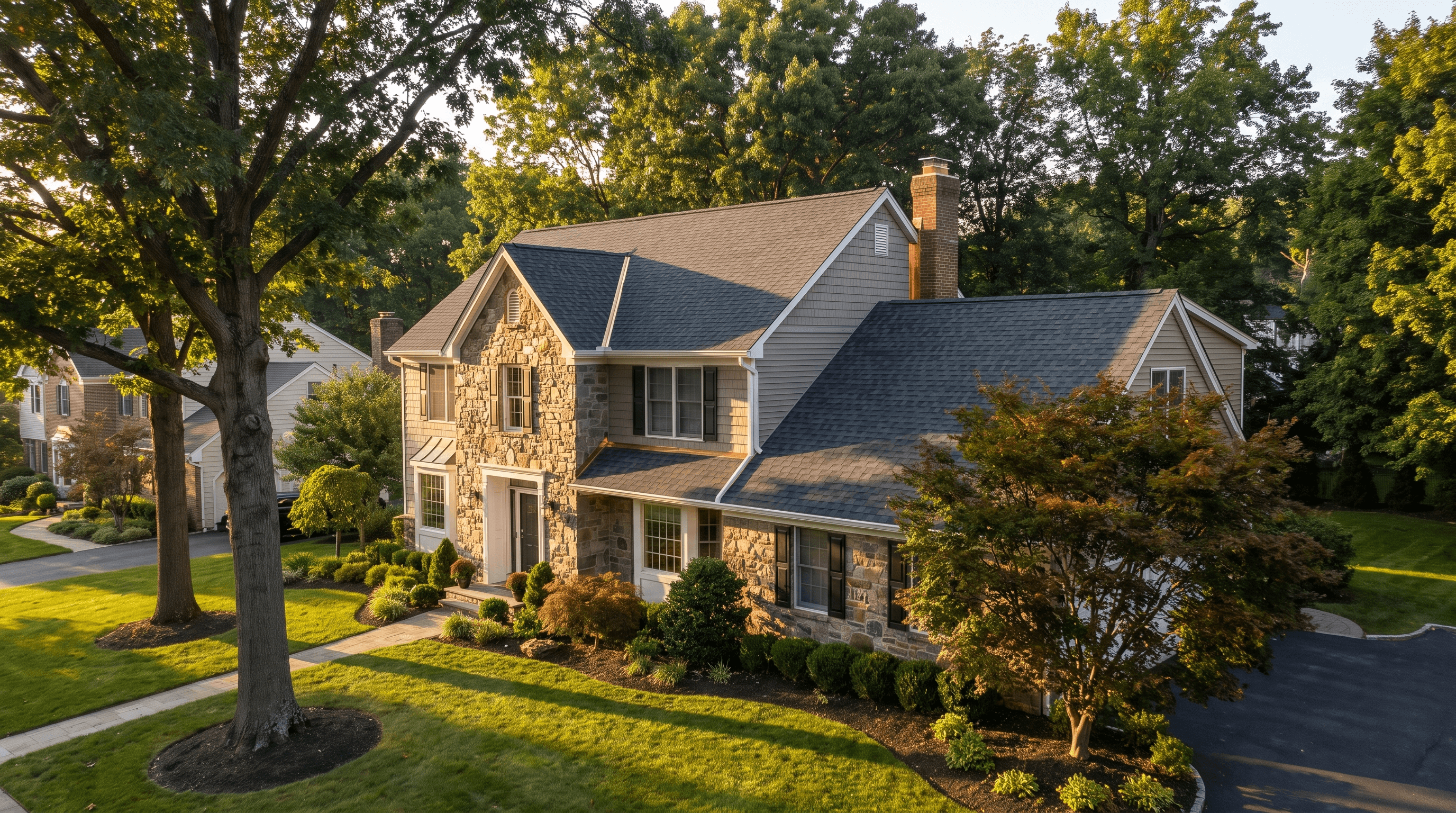
Decking inspected and repaired before anything new goes on.
Ice-and-water where freeze-thaw backs water up under shingles.
Intake and exhaust designed with the roof, not after it.
In short
Most asphalt shingle roof replacements on New Jersey homes run $12,000 to $35,000 and take one to three days on site, within a one to three week window for permit, delivery and inspection. Price is driven by roof area, pitch, how many layers come off and how complex the flashing details are. Standing-seam metal typically costs two to three times as much and lasts correspondingly longer. Roof replacement requires a permit in most NJ municipalities; Pinnacle files it.
Overview
A roof contract with us is a full tear-off: every layer off, the decking exposed, inspected and repaired where it is soft, and then a new assembly built from the deck up. Ice-and-water membrane at the eaves and in the valleys, underlayment across the field, starter course, new flashing at every junction, shingles or panels, ridge, and the intake and exhaust ventilation that lets the assembly breathe. We do not lay over an existing roof.
The reason is simple: a layover hides the decking so nothing underneath can be inspected or repaired, traps heat against the new shingles and shortens their life, and adds weight to a structure never designed to carry it. The saving at installation comes back as a shorter roof. Where we find rot, a previous repair that was never flashed, or decking that has delaminated, you hear about it that day with photographs rather than at the end with an invoice.
On systems: architectural asphalt is the default and, properly installed and ventilated, gives twenty to thirty years in this climate. Standing-seam metal costs more and lasts considerably longer, and suits some architecture far better than others. Low-slope and flat areas need a membrane system rather than shingles — a shingle roof below its minimum pitch is a leak with a warranty on it.
What we do
The covering is what you see from the street. These are the parts that decide how long it stays watertight.
Architectural shingles over a full tear-off, with ice-and-water membrane at the eaves and valleys and metal at every junction. Twenty to thirty years in this climate when it is ventilated properly.
Read moreConcealed-fastener panels with seams rolled on site, over a high-temperature underlayment. Costs more than shingles, lasts far longer, and suits some architecture considerably better than others.
Read moreTPO, EPDM and modified bitumen on the areas a shingle cannot legally cover — porch roofs, dormers, extensions and anything under its minimum pitch.
Read moreFinding where water actually enters, which is frequently nowhere near where the stain appears. We photograph what we find and tell you honestly whether it is a repair or a replacement.
Read moreBalanced intake and exhaust, and the air sealing below it. A new roof stops ice-dam water getting in; only air sealing and ventilation stop the dam forming.
Read more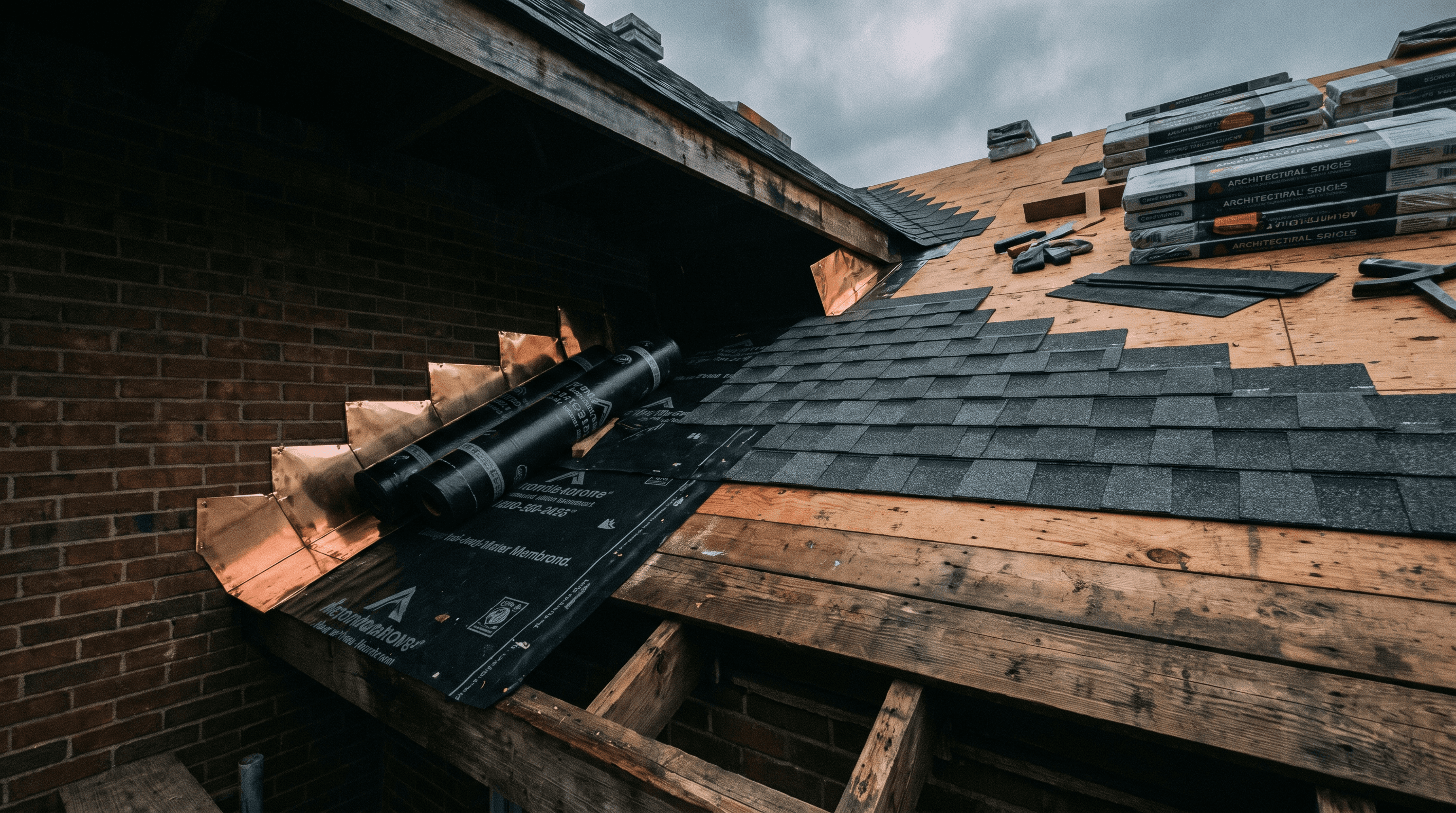
The detail
Sealant is not a roofing material. It is a delay before a leak.
Every junction on a roof has a metal answer — step flashing, counter-flashing, a valley liner, a properly sized boot. We use those, because the one thing caulk reliably does is buy two winters.
Recent work
Roofing is not broken out as its own portfolio category yet. The Westfield addition and the Princeton whole-home renovation both carry full roof work — new structure, tie-ins against existing planes and complete re-covering — and are the fairest read on the standard.
How a roof runs
The same four stages as every Pinnacle project, on the one trade where the forecast is part of the specification.
We inspect from the roof rather than the driveway, photograph the flashing details, valleys and penetrations, and check the attic for staining, daylight and the state of the ventilation. You get the photographs and a plain answer on repair versus replacement.
System, colour and ventilation chosen, the permit filed, and the dumpster and delivery booked against a weather window. Shingles need warmth to seal, so the calendar is part of the specification here rather than an inconvenience to it.
Everything off to the deck, property protected and magnet-swept, decking repaired where it is soft, then membrane, underlayment and new flashing. The roof is dried in the same day it is opened — we do not leave a house under a tarp overnight by choice.
Field, hips, ridge and ventilation completed, site cleared and swept again, then a walkaround with you and the township inspection. The permit is closed as part of the job.
Where we work
Exposure decides how long a roof lasts, and it changes street by street. Southern and coastal-facing slopes in this state age years faster than the ones behind them.
Towns we work in most often
All 21 counties
Questions
Most asphalt shingle roof replacements on New Jersey homes run $12,000 to $35,000, driven by roof area, pitch, how many layers come off and how complicated the flashing details are. Standing-seam metal typically runs two to three times that and lasts correspondingly longer. We measure the roof and price the actual details rather than quoting a square-foot rate over the phone.
One to three days on site for most homes once the crew starts, with the whole job — permit, delivery, tear-off, dry-in, finish and inspection — spanning one to three weeks. Weather sets the pace more than labour does: shingles need warmth to seal properly, so we schedule around the forecast rather than against a fixed date.
Age, the condition of the shingle surface, and whether the flashing details are intact. A twelve-year-old roof leaking at a chimney is a flashing repair, not a replacement. A twenty-five-year-old roof with granule loss and curling is at the end of its service life. We photograph what we find and show you, because “you need a new roof” is the easiest thing in this industry to say and the hardest for a homeowner to check.
Generally yes. Roof replacement requires a building permit in most New Jersey municipalities, and the work is inspected. We file the permit, meet the inspector and close it out as part of the contract rather than leaving it with you.
Code allows a second layer in some circumstances, and we almost never recommend it. A layover hides the decking so nothing underneath can be inspected or repaired, it traps heat and shortens the life of the new shingles, and it adds weight to a structure that was not designed for it. The small saving at installation usually comes back as a shorter roof life.
Related work
Start your project
Let's create a home that fits how you actually live — and holds up for the next twenty years.


