Siding
Vinylsidinghung loose, on purpose.
Almost every complaint about vinyl — the waves, the rattles, the panels that pop off — comes from it being nailed as though it were wood.
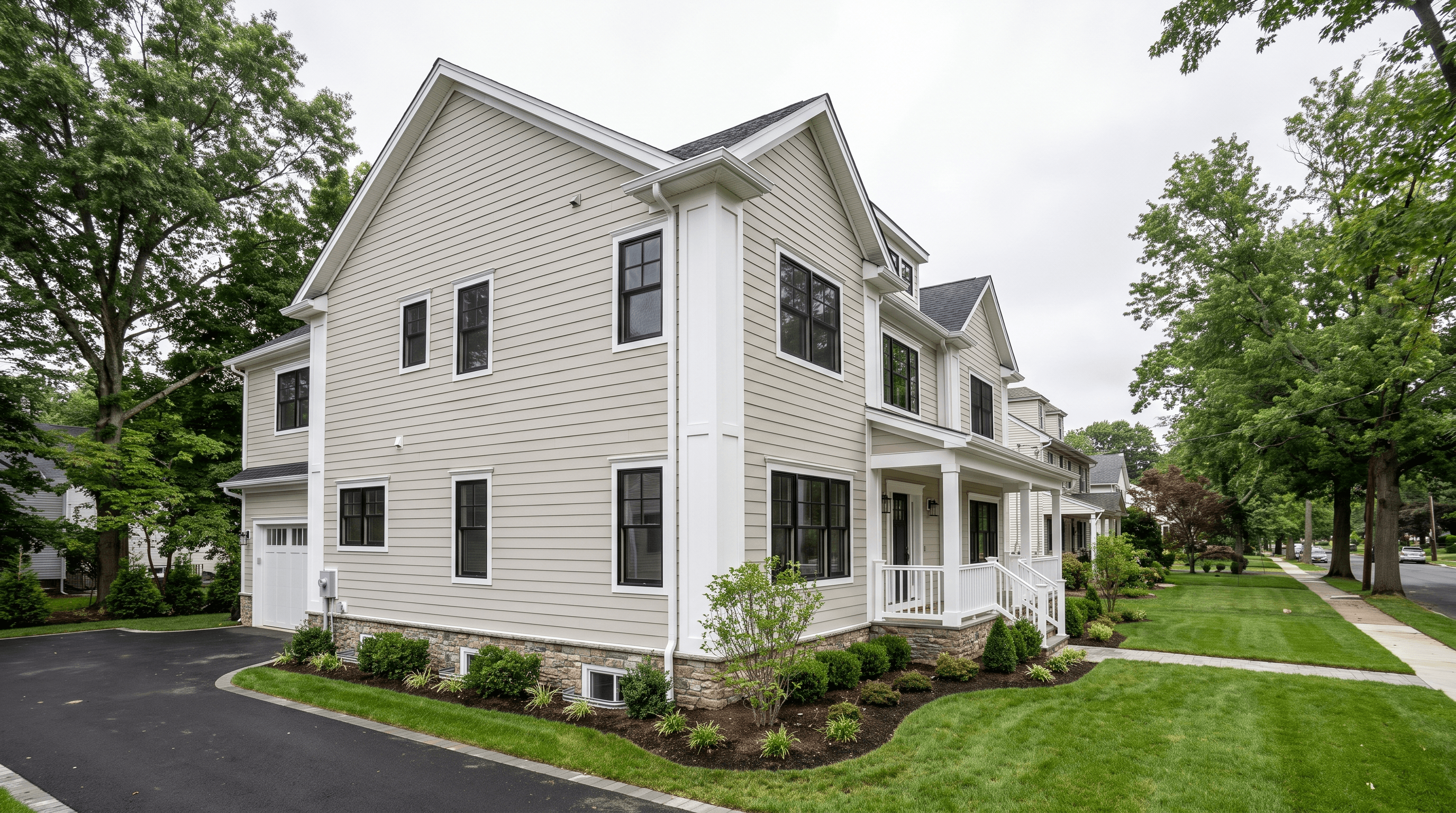
In detail
Vinyl siding
Vinyl expands and contracts a great deal with temperature, and the system is designed around that. Panels hang from the nailing hem rather than being fixed through it: nails are centred in the slot, driven straight, and left a fraction loose so the panel can slide. Nail it tight, or at the end of a slot, and the panel has nowhere to go on a hot afternoon — so it buckles into the waves people associate with cheap vinyl, which is usually not the vinyl at all.
The other half is what it hangs on. Vinyl is thin and takes the shape of whatever is behind it, so an uneven wall telegraphs straight through the finished face. We strip, make the substrate flat, repair sheathing where needed and install a water-resistive barrier before anything goes up. J-channel, starter strip and corner posts are set with the correct overlaps and drainage, and penetrations get proper mounting blocks rather than a cut hole and caulk.
What this covers
- Nails centred in the slot and left loose for thermal movement
- Substrate made flat, because vinyl shows everything behind it
- Water-resistive barrier before any panel goes up
- Mounting blocks at penetrations rather than cut holes and sealant
- Part of
- Siding
- Typical timeline
- 2–5 weeks
- Where
- All 21 New Jersey counties
Questions
Asked most aboutvinyl siding
Why does vinyl siding look wavy?
Two causes, and both are installation. Either the panels were nailed too tight or off-centre in the slot, so they cannot expand and buckle when it gets hot; or the wall behind is not flat and the thin panel is simply following it. Neither is a defect in the material, and both are avoidable.
How long does vinyl siding last?
Thirty years or more for a quality product that was hung properly, though colour will soften over that time, particularly on southern elevations. Impact is its weakness — a stray ball or a hailstorm cracks it where fiber cement would not — but individual panels can be unlocked and replaced, which is a genuine advantage.
The rest of the scope
Everything else insiding

Start your project
Ready to build or remodel your home?
Let's create a home that fits how you actually live — and holds up for the next twenty years.