Roofing
Asphalt shingleroof replacementbuilt from the deck up.
The most common roof in New Jersey, and the one where the difference between installers is almost entirely invisible from the ground.
In detail
Asphalt shingle roofing
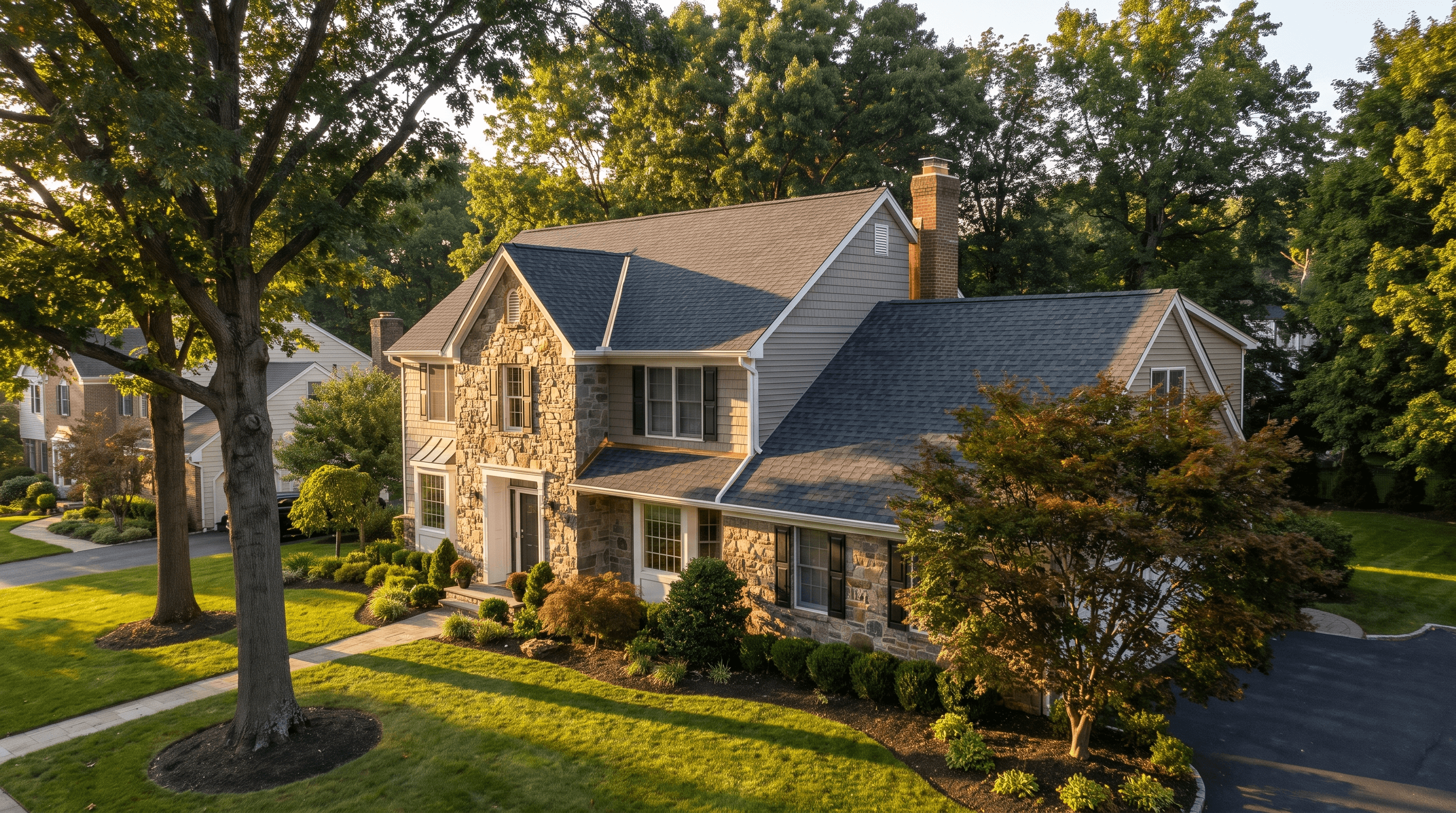
Architectural shingles are the default for good reason: they handle our freeze-thaw cycling, they are repairable, and a properly installed and ventilated roof gives twenty to thirty years here. What varies enormously is what goes on under them. We tear off every existing layer, expose the decking, and walk it — soft sheathing, delaminated plywood and old repairs that were never flashed all get replaced before anything new is laid.
Then the assembly: ice-and-water membrane at the eaves, in the valleys and around penetrations, synthetic underlayment across the field, a starter course at the eaves and rakes, new step flashing against every wall, new counter-flashing cut into the chimney, and the shingles themselves nailed to the manufacturer’s pattern rather than to whatever is quick. Hip and ridge caps are purpose-made pieces, not field shingles cut down, because a cut shingle on a ridge is where a roof starts failing first.
What this covers
- Full tear-off to the deck, with sheathing inspected and repaired
- Ice-and-water membrane at eaves, valleys and penetrations
- New step and counter-flashing at every wall and chimney
- Purpose-made hip and ridge caps, and balanced ventilation
- Part of
- Roofing
- Typical timeline
- 1–3 weeks
- Where
- All 21 New Jersey counties
Questions
Asked most aboutasphalt shingle roofing
How long does an asphalt shingle roof last in New Jersey?
Twenty to thirty years for architectural shingles that are properly installed and, critically, properly ventilated. An unventilated roof assembly cooks its own shingles from underneath and can lose a third of that life. Exposure matters too — southern and western slopes weather faster than northern ones on the same house.
Can you roof over the existing shingles instead of tearing off?
Code allows a second layer in some circumstances and we almost never recommend it. A layover hides the decking so nothing underneath is inspected or repaired, traps heat against the new shingles and shortens their life, and adds weight to a structure that was not designed for it. The saving at installation comes back as a shorter roof.
The rest of the scope
Everything else inroofing
Start your project
Ready to build or remodel your home?
Let's create a home that fits how you actually live — and holds up for the next twenty years.